 Hey, Nik
≡
FinOps Foundation dropped 'Cloud' from its mission. The interesting work for the next couple of years isn't EC2 optimisation, it's the rest of the stack catching up.

FinOps Foundation dropped "Cloud" from its mission. State of FinOps 2026 says 90% of teams now manage SaaS, 64% handle licensing.
Officially the discipline expanded.
What actually happened: the rest of the stack is moving or moved to usage-based pricing, and a per-team number showed up where there used to be a shared budget line.
Cloud teams have a head start here. Reading itemised bills, mapping spend to teams, having the "why is this up 18% this month" conversation - that muscle is already built. Worth offering it around. The interesting work for the next couple of years isn't optimising EC2. It's helping the rest of the org figure out what their tooling actually costs.
The report backs it up: FinOps practitioners are the second most in-demand hire for 2026, behind only AI/ML engineers. Turns out the skill travels.
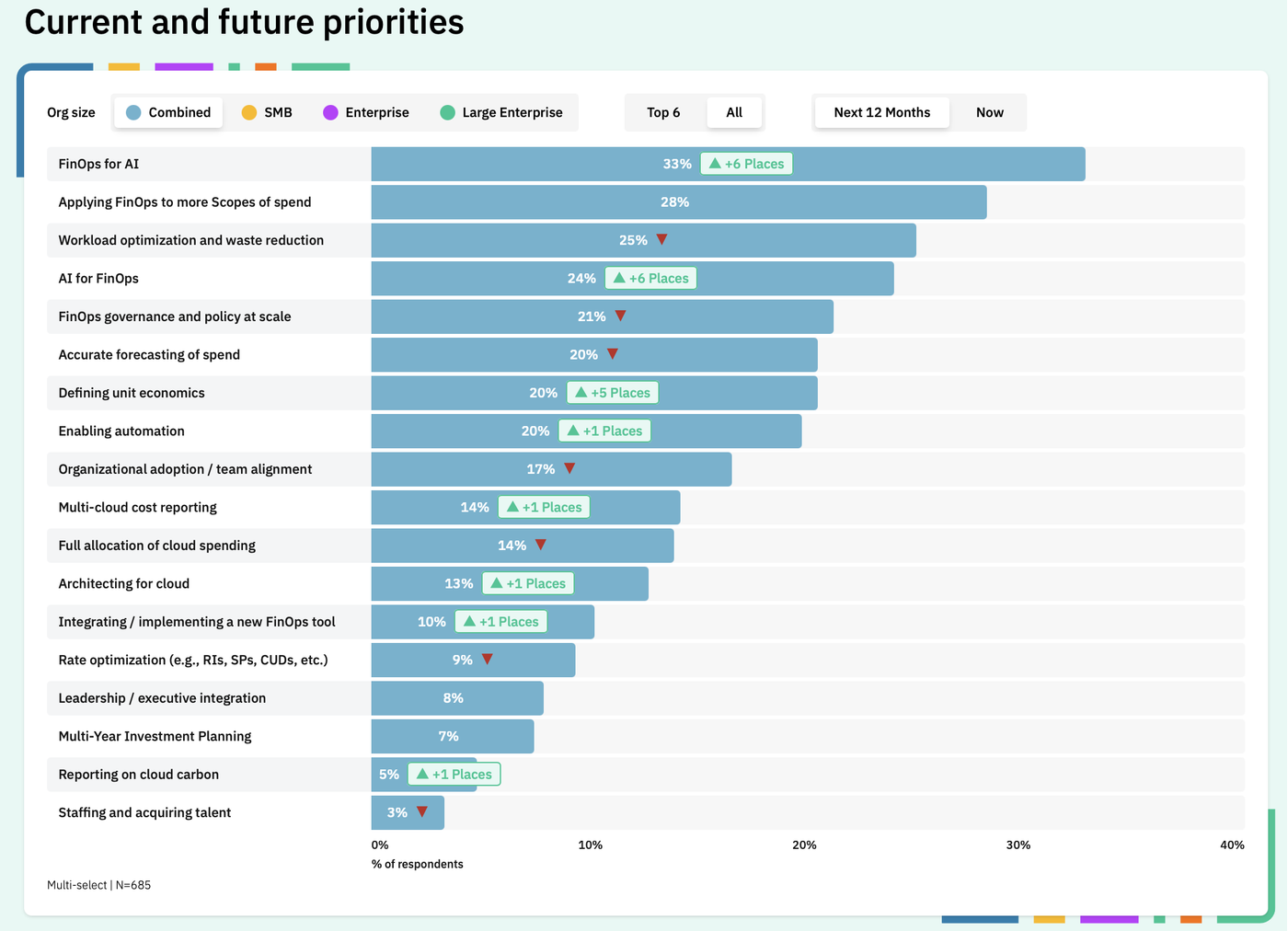
98% of respondents now manage AI spend, up from 31% two years ago.
That number will keep climbing in importance, but the real shift underneath it is pricing model change. Subscriptions are disappearing. GitHub, Hyperscalers, every AI lab - consumption-based, metered in tokens and API calls.
When half your developer tooling bill depends on how many tokens your agents burned last Tuesday, your annual budget is a guess.
The most visible example so far: Uber burned its entire 2026 AI budget by April where 5,000 engineers were on Claude Code, adoption from 32% to 84% in three months, $500-2,000 per engineer per month in API costs.
Their CTO said he's "back to the drawing board." And that's a company with a $3.4B R&D budget.
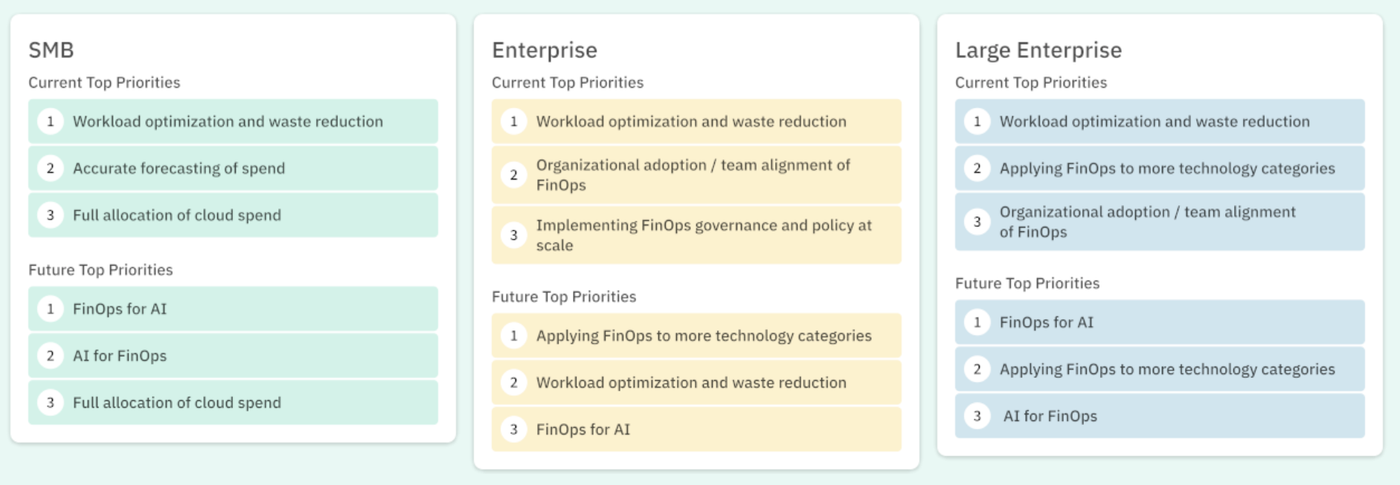
This is next financial year's problem, and most teams aren't ready for it.
The full report is at data.finops.org.